Silicone Manufacturing Certifications & Quality Control

Which standard actually applies to your market, what each certificate covers, and the inspection equipment behind every production lot. Certificate copies and scope statements are provided on request.

Request Certificate Copies See Inspection Capability

Compliance Is Not One Certificate — It Depends on Your Market

Buyers often ask for "the certificate" when what they actually need is a specific set of documents matched to where the product will be sold and how it will be used. A silicone kitchen spatula sold in Germany, an LSR respiratory mask component, and an automotive grommet are governed by three different frameworks — and the material has to be selected accordingly, before tooling is cut.

The sections below are grouped by programme type. Find the one closest to your application, then tell us the target market on your RFQ and we will build the documentation path into the project from the start.

General & Food-Contact Compliance

Applies to all programmes

These are our baseline quality and material compliance standards. Unless your project is regulated otherwise, it falls into this group. Production runs under ISO 9001 quality management held by our qualified partner facilities — Yude coordinates DFM, tooling, documentation and quality follow-up across the chain.

ISO 9001

Quality management system

International quality management system certification covering standardised processes across the production chain — from enquiry and DFM review through tooling, moulding, inspection and dispatch. The certificate is held by our qualified partner facilities.

Why it matters to you: it is the baseline evidence that processes are documented and repeatable, not dependent on individual operators.
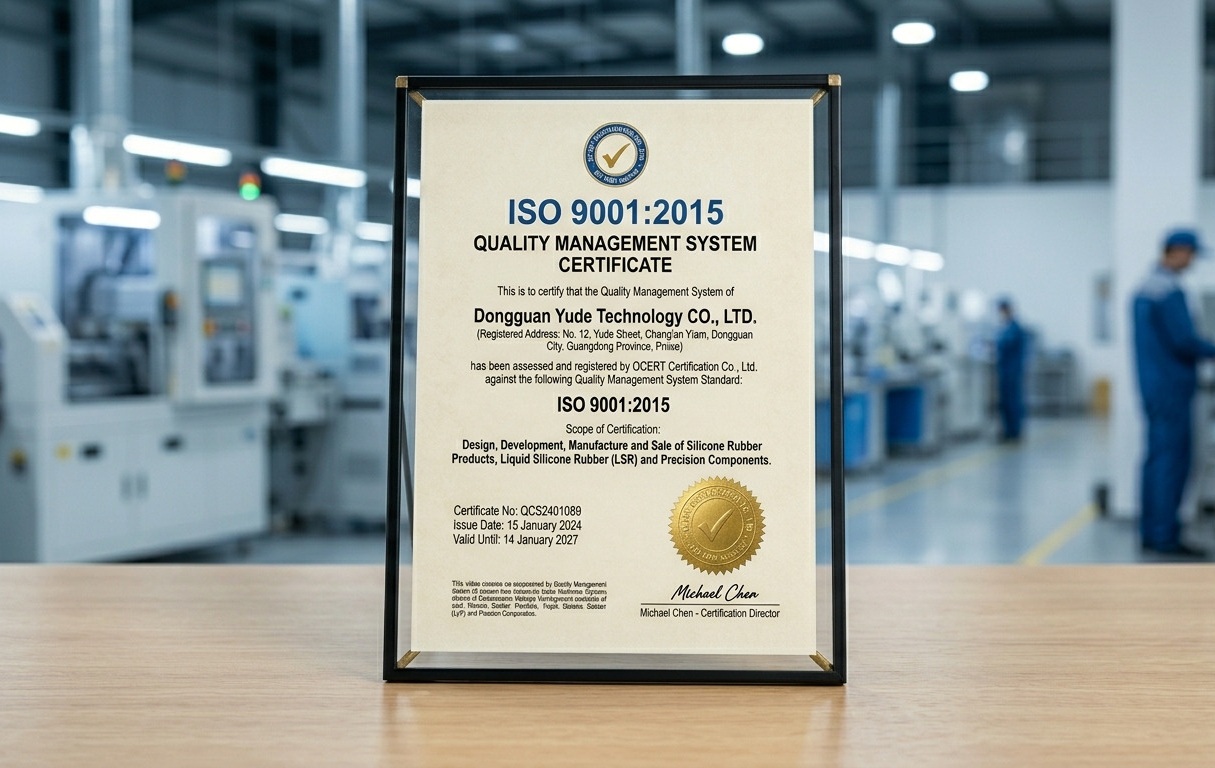
ISO 9001 quality management system certificate

FDA 21 CFR 177.2600

US food contact

The US regulation covering rubber articles intended for repeated food contact. It governs the extractable limits of the cured material, so the compound has to be selected to comply — not merely tested afterwards.

Why it matters to you: required for kitchenware, bakeware, baby feeding products and food-processing components sold into the United States.
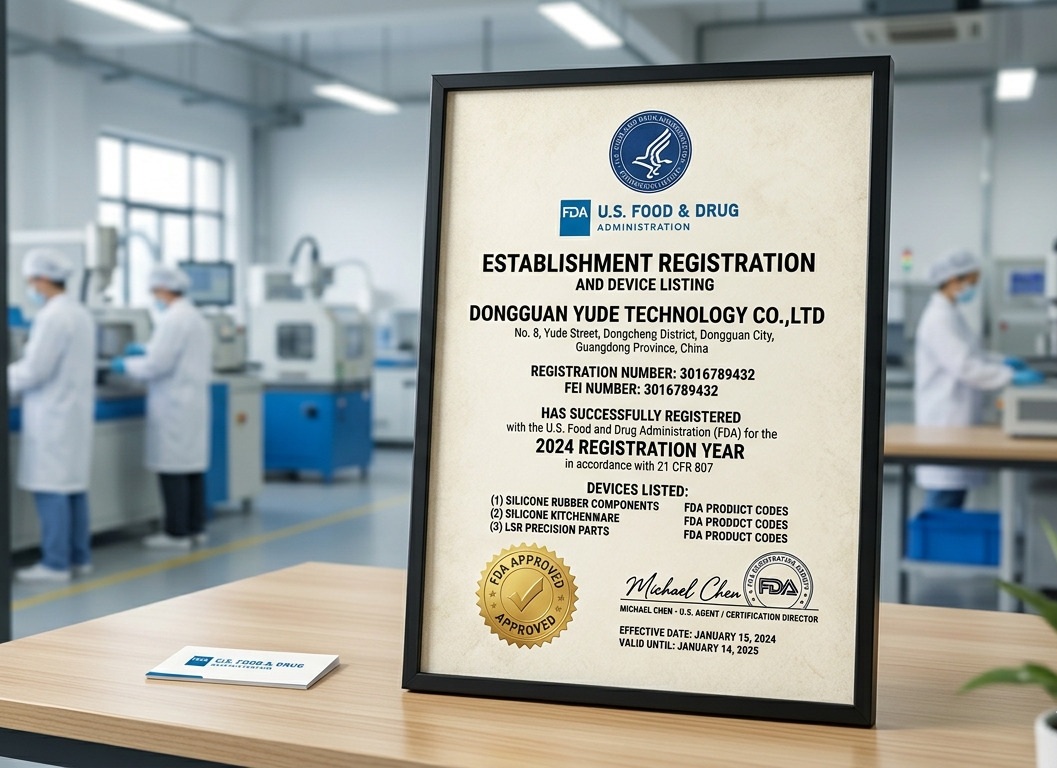
FDA 21 CFR 177.2600 food contact compliance certificate

LFGB

German / EU food contact

The German Food and Feed Code framework for food-contact materials, generally regarded as stricter than FDA 21 CFR 177.2600. Required for the German market and widely accepted across the EU.

Why it matters to you: if you sell into both the US and EU, specify both standards on the drawing so one compound is certified to each.
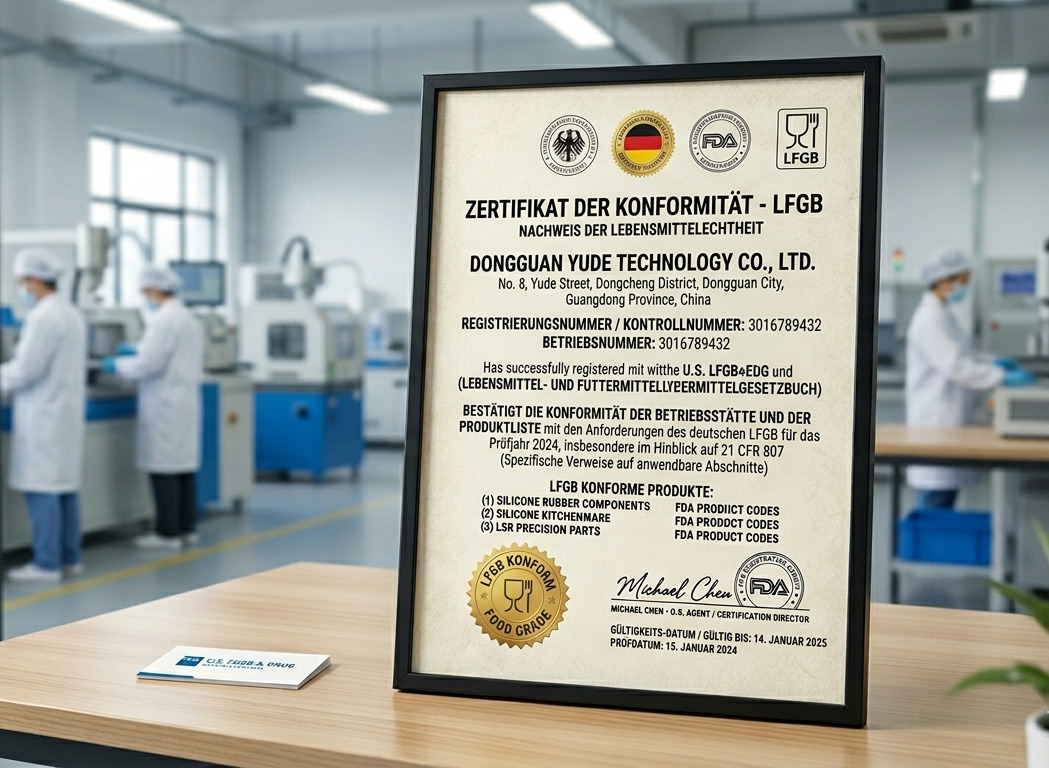
LFGB German food contact compliance certificate

RoHS

Hazardous substance restriction

Restriction of specific hazardous substances in electrical and electronic equipment. Applies when your silicone part is a component of a device placed on the EU market.

Why it matters to you: consumer electronics accessories, keypads and protective cases commonly require it as a condition of sale.
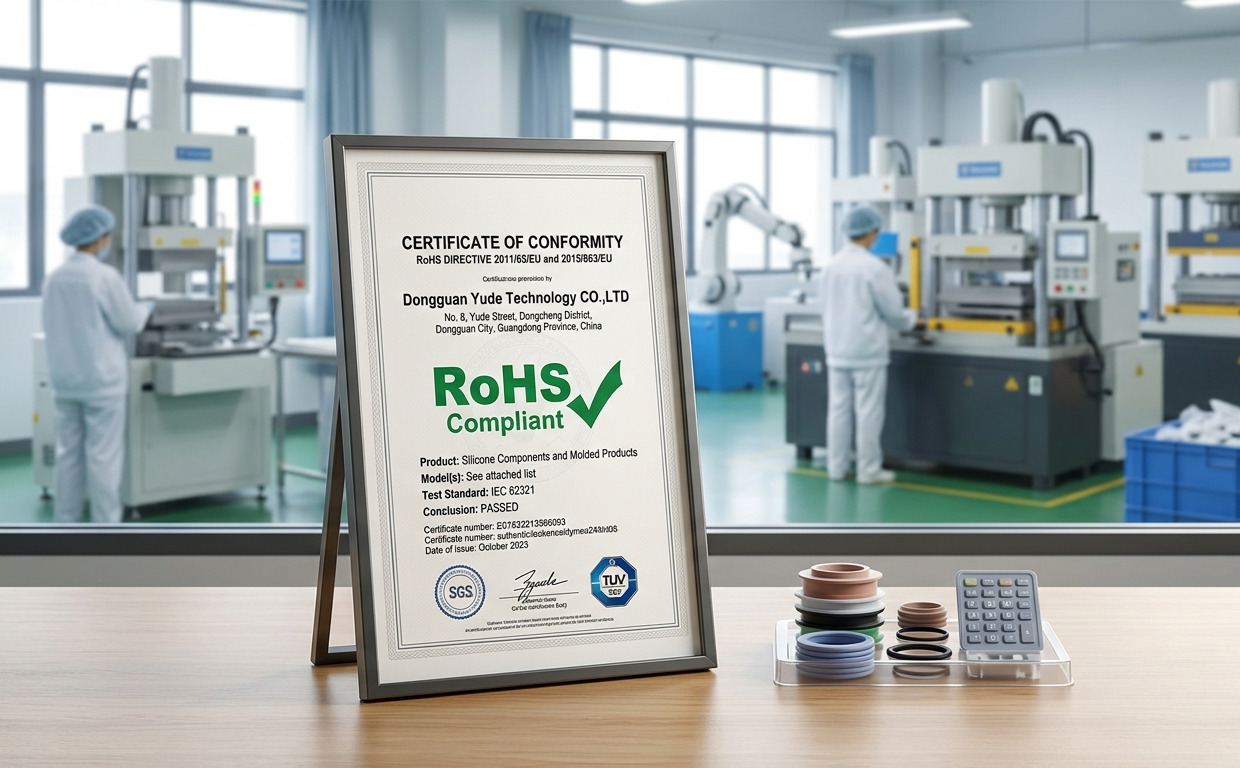
RoHS hazardous substance restriction compliance certificate

REACH

EU chemical regulation

The broader European regulation covering registration, evaluation and restriction of chemical substances. Distinct from RoHS — which one applies depends on the end product rather than the material alone.

Why it matters to you: silicone parts shipped to the EU commonly need both REACH and RoHS statements in the compliance file. What a declaration has to contain to be auditable.
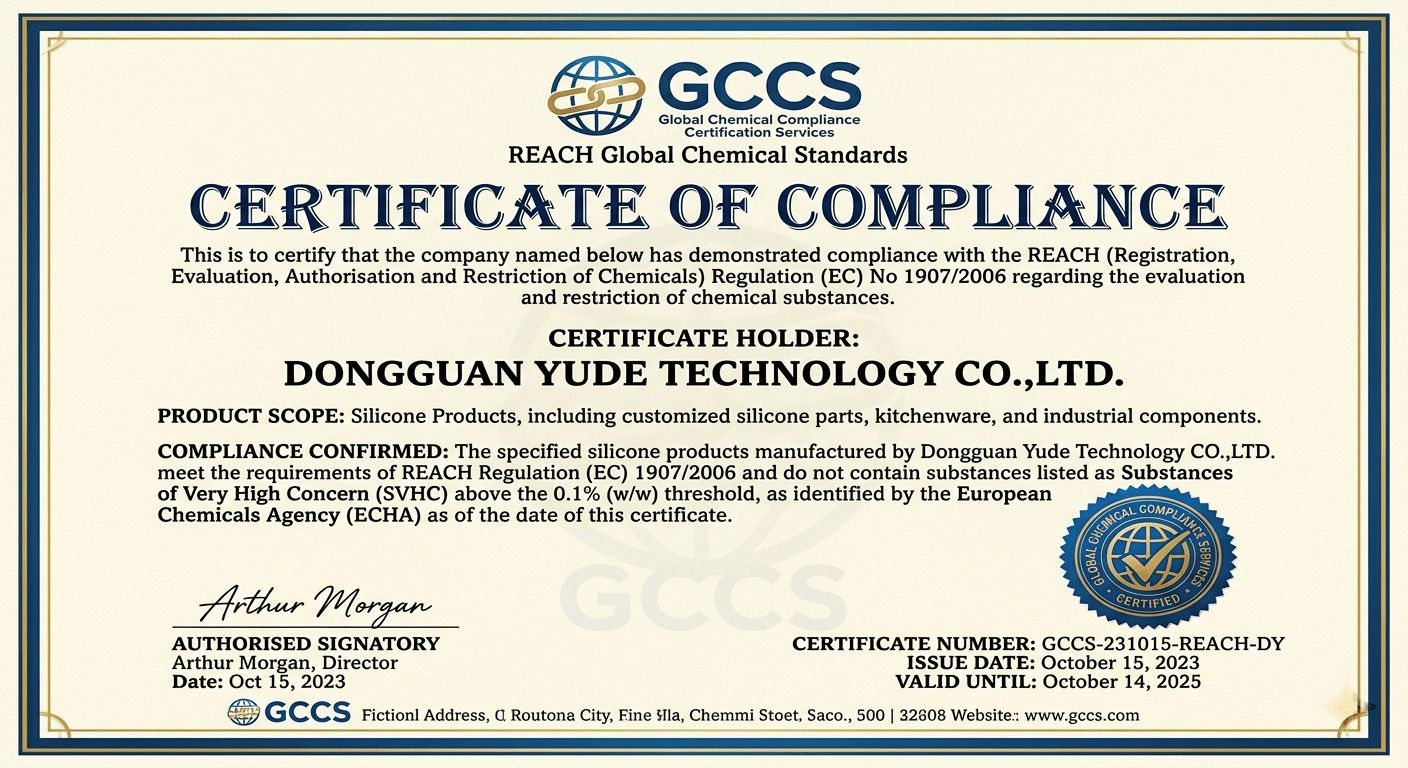
REACH EU chemical regulation compliance certificate

Medical-Grade Requirements

Medical programmes only

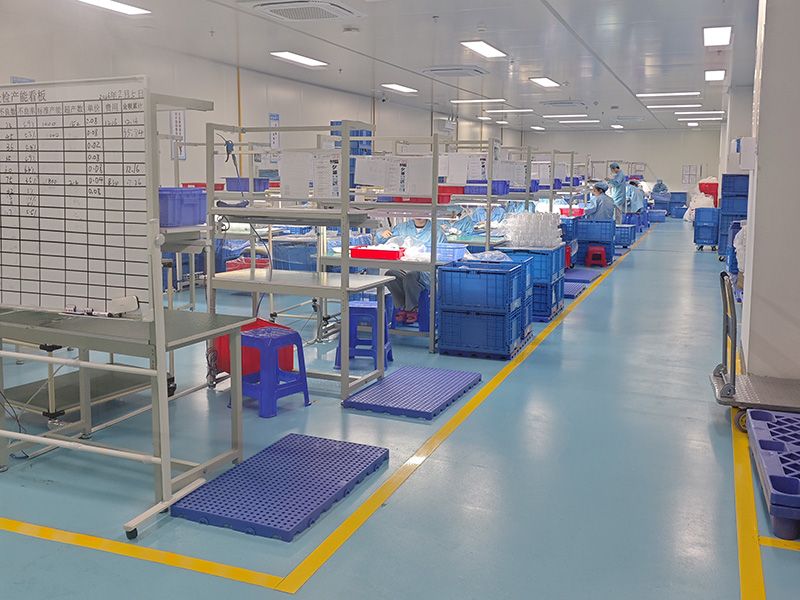
Medical and healthcare components are produced under a dedicated quality and documentation path, in a controlled environment. These requirements apply specifically to medical projects and are not part of our general production scope. Medical programmes run at qualified partner facilities: the ISO 13485 certificate and ISO Class 7 cleanroom shown here are held and operated by our long-term manufacturing partners, with Yude coordinating engineering, documentation and quality follow-up. See our medical silicone capability page for the full picture.

ISO 13485

Medical device QMS

Quality management system standard specific to medical devices, covering design control, risk management, traceability and documentation retention over the device lifetime.

Why it matters to you: device manufacturers are generally required to source from certified suppliers, and your own regulatory submission may depend on it.

ISO 13485 medical device quality management certificate

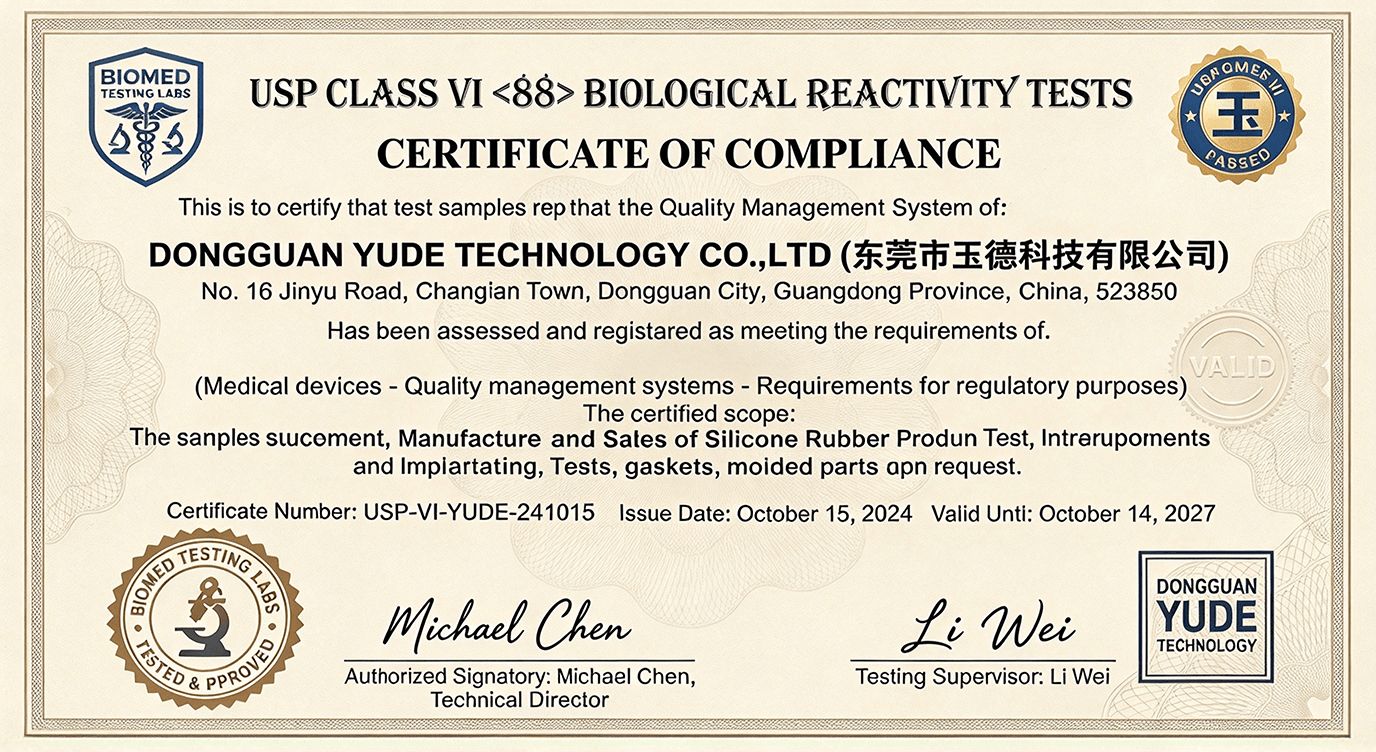
USP Class VI

Biological reactivity

A biological reactivity test widely used as a baseline for materials in long-term or implantable body contact. Often requested alongside ISO 10993 evaluation as supporting evidence.

Why it matters to you: a common purchasing requirement for respiratory, catheter and surgical components.

USP Class VI biological reactivity test certificate

ISO 10993

Biocompatibility evaluation

A family of standards for the biological evaluation of medical devices, with tests selected according to the nature and duration of body contact. Our high-purity LSR grades are specified to biocompatibility requirements.

Why it matters to you: the specific tests required depend on your device classification — tell us early so the right path is built in.

ISO Class 7 Cleanroom

Controlled environment

Medical and food-contact components are moulded in a partner-facility ISO Class 7 HEPA-filtered cleanroom, maintaining airborne particulate limits below the class standard.

Why it matters to you: particulate control is a hard requirement for implants, respiratory and food-contact parts, and cannot be added retroactively.

ISO Class 7 HEPA-filtered cleanroom moulding environment

Automotive Programme Requirements

Automotive programmes only

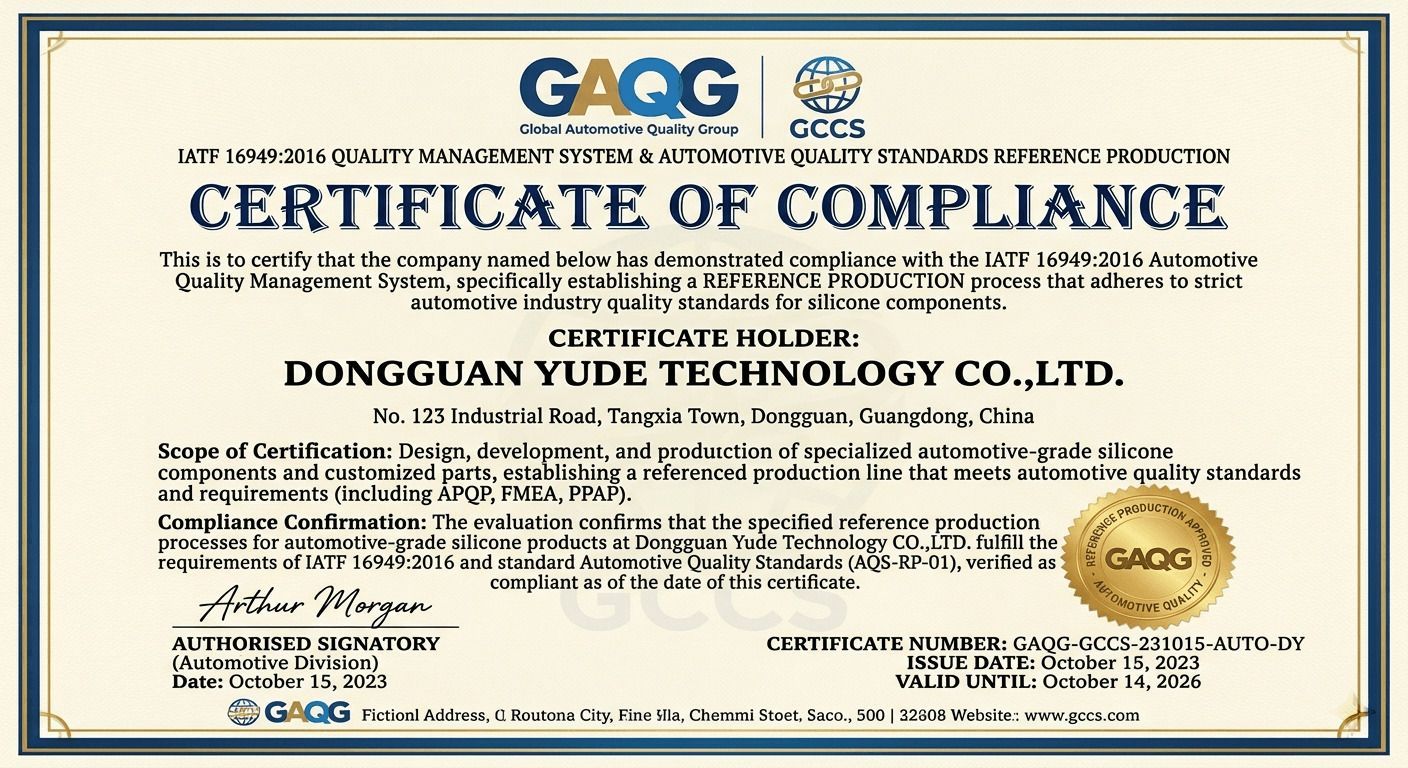
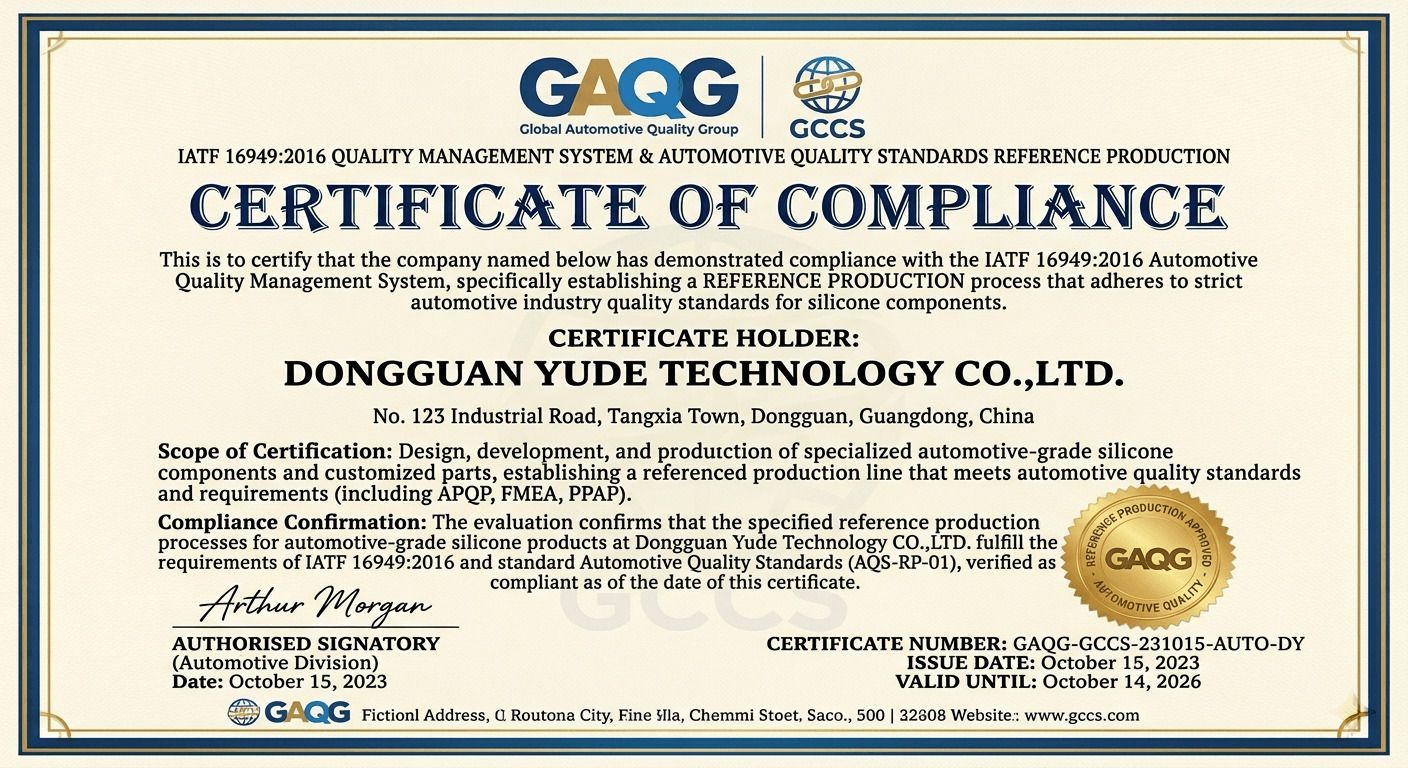
Automotive components carry their own quality management and documentation expectations, set by the vehicle manufacturer rather than by us. IATF 16949 certification for automotive programmes is held by our qualified partner facility. See our automotive rubber capability page for typical parts and materials.

IATF 16949

Automotive QMS

The quality management standard specific to automotive production and service parts, which superseded ISO/TS 16949. It builds on ISO 9001 with sector-specific requirements for process control and continuous improvement.

Why it matters to you: typically a prerequisite for supplying tiered automotive supply chains.

IATF 16949 automotive quality management certificate

Programme-Specific Documentation

PPAP & OEM approvals

Requirements beyond the standard — production part approval process documentation, specific OEM material approvals, or customised inspection plans — should be stated in your RFQ so they can be planned rather than retrofitted.

Why it matters to you: PPAP levels and OEM approvals vary widely; confirming them up front avoids rework at validation.

Inspection Capability

Equipment and process controls applied from raw material intake through to final packaging audit.

±0.005mm
Cavity tolerance maintained by CNC high-speed milling and mirror EDM
±0.002mm
3D coordinate measuring machine resolution for incoming verification
±0.1%
Dynamic micro-injection shot weight variance across the run
ΔE ≤ 1.5
Pantone colour matching tolerance with automated compounding
Shore 20A–80A
Hardness range across 10 incremental grades, verified by durometer
100% lot traceability
Raw material batch testing through to final packaging audit, per lot

How a Lot Is Controlled

Every production lot starts with raw silicone material batch testing — rheometer viscosity and durometer hardness — before the material is released to the moulding floor. During production, automated deflashing and standardised inspection checkpoints are applied at each stage, including cryogenic deflashing where parting-line flash must be removed without damaging the part. The lot closes with a final packaging audit, so the material batch, process parameters and inspection results are traceable together.

Specify the documentation you need when you place the order, and it will be built into the production paperwork rather than assembled afterwards. See the workshop for the equipment behind these capabilities.

Frequently Asked Questions

Which certificate do I need for food-contact silicone products?

For the United States market, FDA 21 CFR 177.2600 covers rubber articles intended for repeated food contact. For the German and wider European market, LFGB is the relevant framework and is generally regarded as the stricter of the two. If you sell into both, specify both on your drawing so we can select a compound certified to each.

Is RoHS the same as REACH?

No. RoHS restricts specific hazardous substances in electrical and electronic equipment, while REACH is the broader European regulation covering registration, evaluation and restriction of chemical substances. Silicone parts destined for the EU commonly need both, and which one applies depends on the end product rather than the material alone.

Do you hold ISO 13485 for medical device components?

Medical programmes are produced under partner-held ISO 13485 quality management with USP Class VI and ISO 10993 biocompatibility requirements, in a partner-facility ISO Class 7 HEPA-filtered cleanroom. Certificate copies and scope statements are provided on request for medical projects — see medical silicone manufacturing.

What is the difference between USP Class VI and ISO 10993?

USP Class VI is a biological reactivity test originally developed for plastics, widely used as a baseline for implantable and long-term contact materials. ISO 10993 is a family of standards for biological evaluation of medical devices, selected according to the nature and duration of body contact. Many device programmes require ISO 10993 evaluation; USP Class VI is often requested alongside it as supporting evidence.

Which standard applies to automotive rubber components?

Automotive programmes are produced under partner-held IATF 16949 (which superseded ISO/TS 16949), the quality management standard specific to automotive production and service parts. Requirements beyond the standard, such as PPAP documentation or specific OEM material approvals, should be stated in your RFQ — see automotive rubber components.

Can you provide material compliance documentation with each shipment?

Yes. Every production lot is traceable from raw silicone material batch testing through to final packaging audit. We can supply the compound’s SDS (MSDS), material compliance statements and inspection records per lot; specify the documentation you need when you place the order so it is built into the production paperwork.

Can we audit your facility before placing an order?

Yes. Factory audits are welcome, either in person or by video walkthrough of our tooling room and the partner facilities involved in your programme — cleanroom and inspection areas. We also sign formal Non-Disclosure Agreements before reviewing any project files, so drawings and specifications can be shared safely during evaluation. Arrange an audit.

How do you verify dimensional accuracy in production?

Tooling cavities are machined by CNC high-speed milling and mirror EDM with cavity tolerances held within ±0.005mm, and incoming verification uses 3D coordinate measuring machines with ±0.002mm resolution. Automated deflashing and standardised inspection checkpoints are applied at each stage, with the specific inspection plan agreed per part.