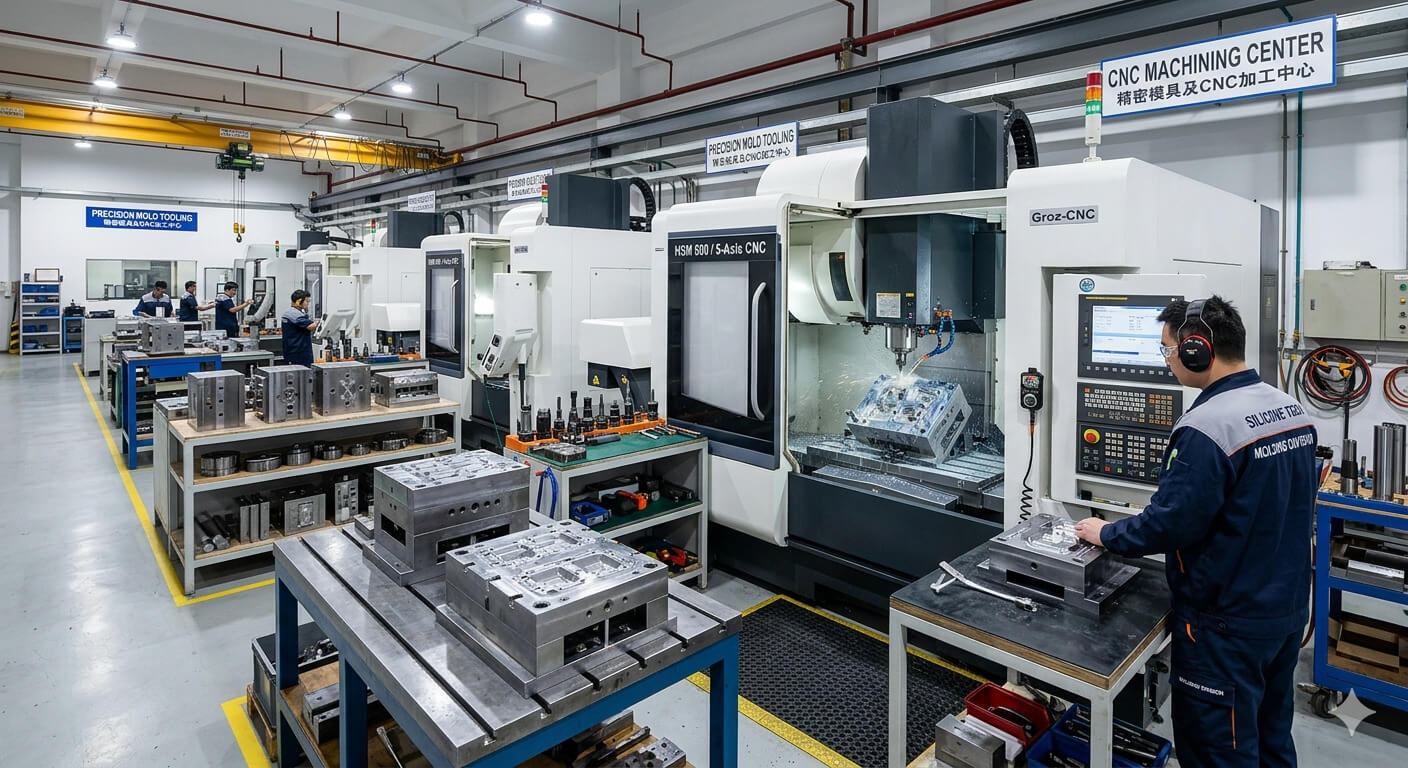
Precision Mold Tooling & CNC Center
Excellent silicone component performance originates from robust tool design. Our dedicated CAD/CAM engineering office executes comprehensive Design for Manufacturability (DFM) verification prior to any steel allocation. Equipped with high-speed CNC machinery, precision EDM tooling stations, and automated coordinate measuring systems, we fabricate custom mold cavities maintaining exceptional mechanical tolerances down to ±0.01mm. This eliminates flash risks at the root and extends production tool lifespan for high-volume contract reliability.
- ✓ Advanced scientific shrinkage compensation and thermal simulation.
- ✓ P20, NAK80, and S136 high-grade hardened tool steel architectures.
- ✓ Accelerating smooth transitions from engineering prototypes to scalable production.
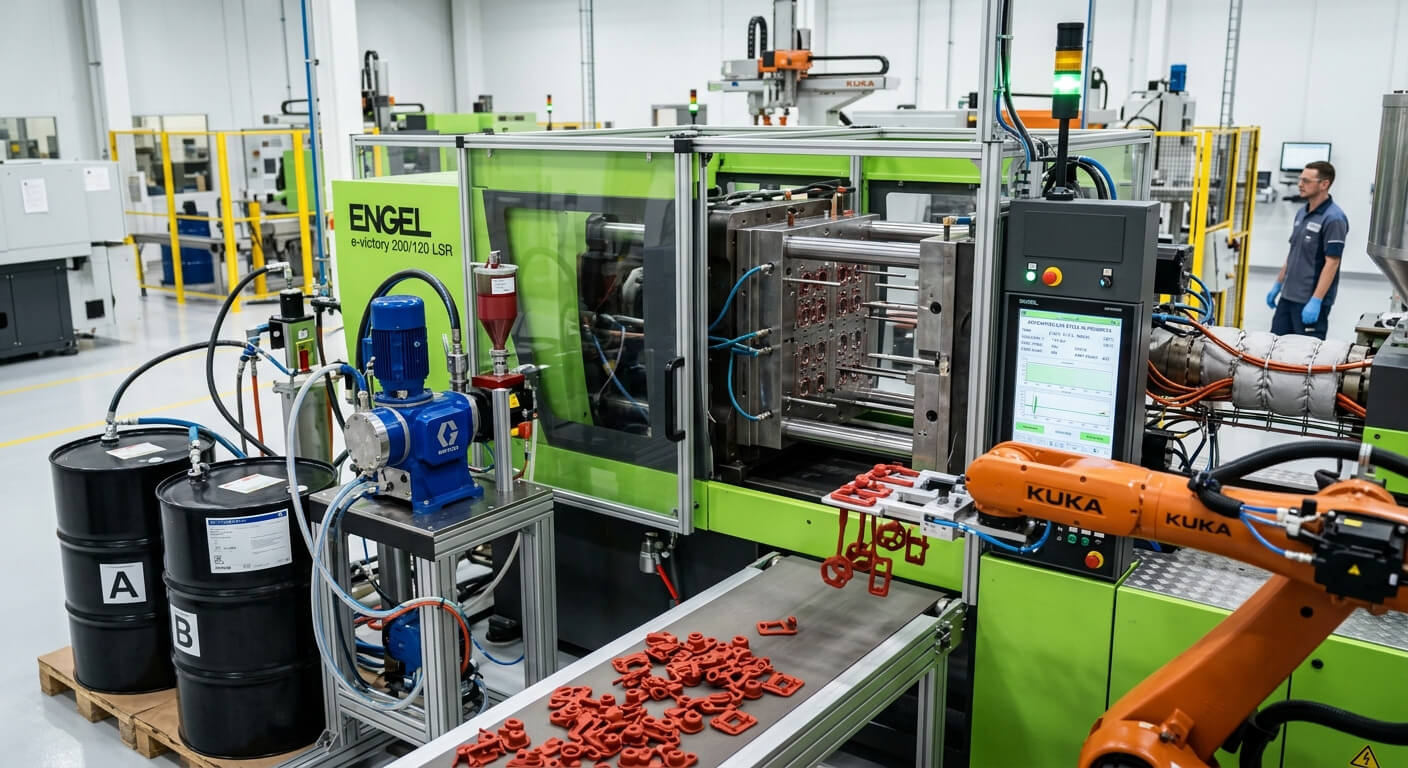
Automated LSR (Liquid Silicone Rubber) Injection
For complex technical components requiring absolute hermetic sealing, tight optical metrics, or strict biocompatibility, our automated Liquid Silicone Rubber (LSR) injection molding department delivers zero-defect repeatability. Utilizing dust-controlled positive-pressure machinery integrated with advanced closed-loop cold runner systems and computerized multi-component dosing pumps, we guarantee precise material blending with zero volatile contamination. This process supports fully untended multi-cavity extraction for maximum technical output efficiency.
- ✓ Closed pneumatic dosing loops eliminate air pocket entrapment.
- ✓ Dynamic micro-injection weight accuracy within a variance of ±0.1%.
- ✓ Engineered specifically for medical micro-valves, automotive seals, and optical components.
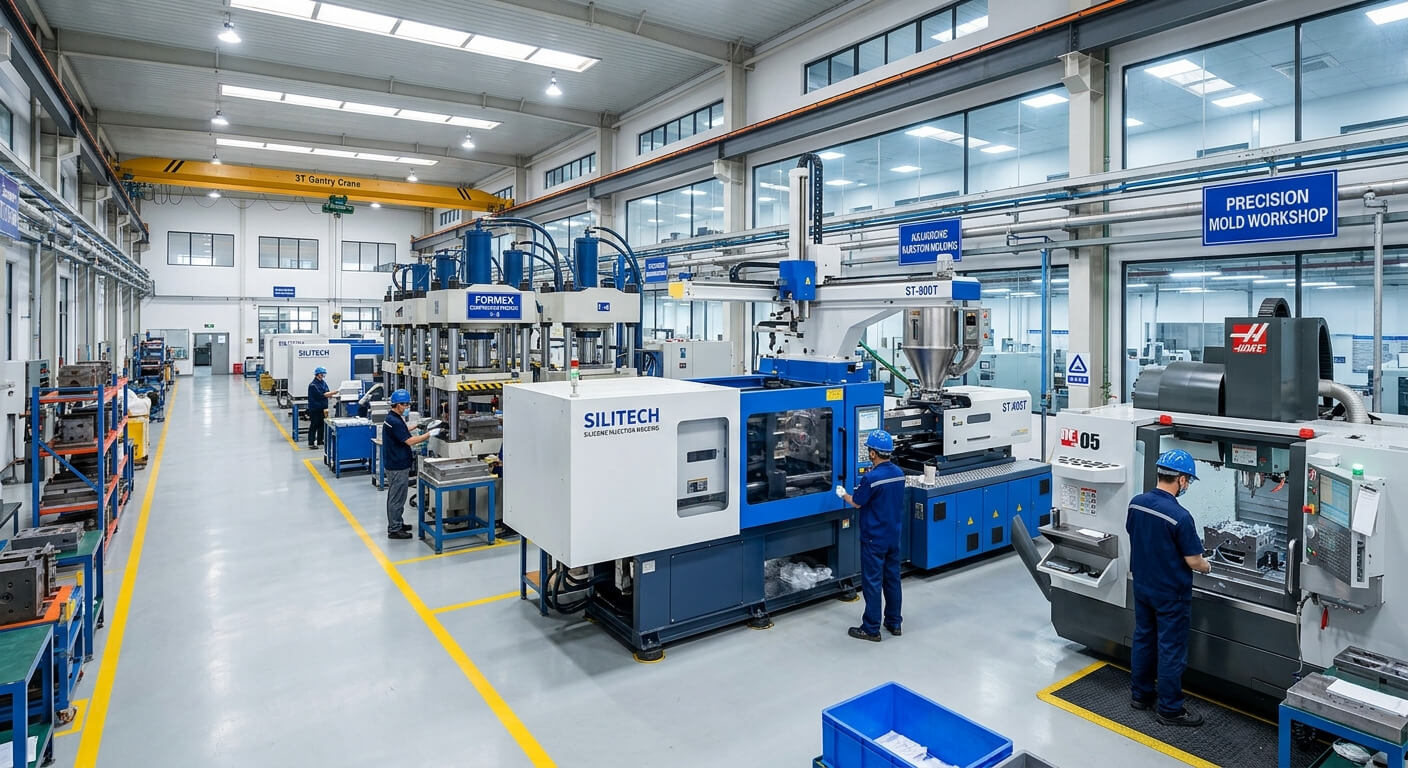
Advanced Solid Compression Molding
Our heavy-duty solid compression molding lines are optimized to handle extensive high-volume commercial production campaigns. Operating multi-ton hydraulic molding presses equipped with localized micro-processor thermal controls, we enforce absolute structural uniformity across every structural sheet. Automated material pre-forming ensures optimized loading weight uniformity, preventing part thinning or parting-line variance under sustained high pressures.
- ✓ Dynamic multi-stage degassing routines prevent internal micro-voids.
- ✓ Precision color formulation blending compliant with ΔE ≤ 1.5 delta criteria.
- ✓ Engineered for large gaskets, heavy industrial sealing rings, and consumer electronics.
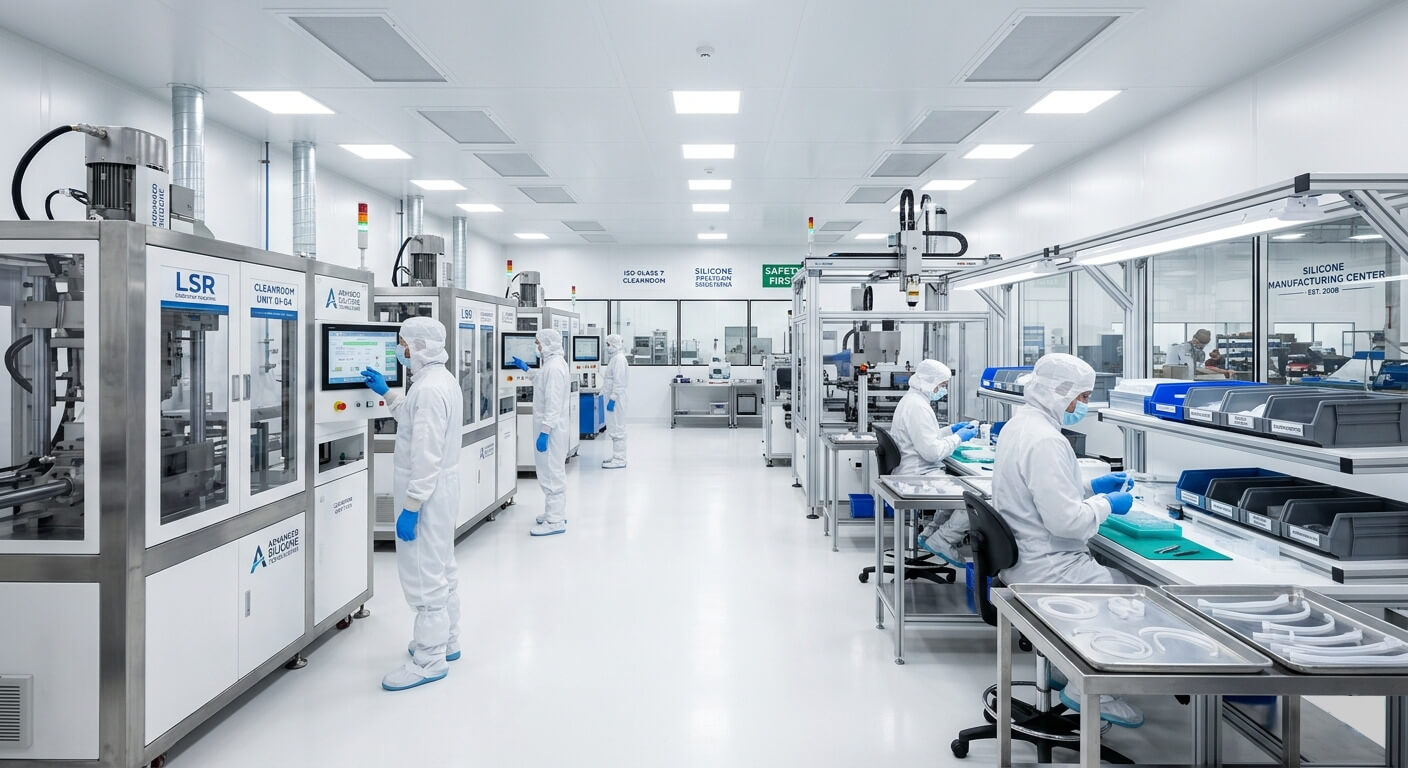
ISO Class 7 Certified Medical Cleanroom
To serve medical-grade biocompatibility applications and high-purity infant infantware processing, Yude operates an isolated ISO Class 7 (Class 10,000) environmental cleanroom facility. Particulate filtration, constant atmospheric over-pressure tracking, and absolute relative humidity controls eliminate airborne particulate hazards. Finished technical components go through comprehensive statistical quality verification here—including automated vision screening, durometer mapping, and strict AQL defect classification before sealing.
- ✓ 100% dust-free post-vulcanization and clinical inspection environments.
- ✓ Compliant with strict EU LFGB, US FDA 21 CFR, and global RoHS/REACH standards.
- ✓ Fully serialized documentation supporting transparent raw batch audit traceability.